Pyramid Texts, Hidden Tombs & the Serapeum — A Full Day in Egypt's First Necropolis
Click any image to view in full screen
Most travelers who visit Egypt see the Giza Pyramids and leave believing they have seen the best of ancient Egypt. The ones who know better come to Saqqara. This is where pyramid building began, where the world's oldest religious texts were carved into stone, and where a licensed Egyptologist with genuine insider knowledge can take you into tombs that most tourists never know exist. Combined with the raw desert experience of Dahshur's Bent and Red Pyramids, this is one of the most rewarding days available anywhere in Egypt.
This full-day private tour covers two of Egypt's most historically significant but least crowded archaeological sites. Starting at Dahshur, approximately 42 km south of Cairo, you will see where Egypt's architects first mastered true pyramid construction, with the option to enter both the Bent and Red Pyramids. From there you head north to the vast Saqqara necropolis — the burial ground of ancient Memphis, Egypt's first capital — for an afternoon that goes well beyond the Step Pyramid most visitors stop at. With a licensed Egyptologist as your guide and a private vehicle throughout the day, you have the access, the time, and the expertise to experience these sites the way they deserve to be seen.
Full Day
Private guided tour
Daily (upon request)
Departs: 8:00 AM from your Cairo hotel
Morning — Dahshur
Located approximately 42 km south of Cairo, Dahshur is where Egypt's architects first solved the problem of building a true pyramid. You will visit three pyramids here, each representing a different chapter in that story.
Built by Pharaoh Sneferu around 2600 BCE, the Bent Pyramid's dramatic change in angle mid-construction tells the story of engineers solving a problem no one had faced before. Entry is optional. The descent is steep, narrow, and physically demanding with passages requiring you to crouch and move carefully. Exhilarating for those who go in, and breathtaking from the outside for those who don't.
Egypt's first successful smooth-sided pyramid and the direct predecessor to the Giza Pyramids. Built by the same Pharaoh immediately after the Bent Pyramid, this is where the blueprint for Giza was established. The interior descent is more manageable and leads to a magnificent corbelled burial chamber with a ceiling rising over 12 meters, something very few visitors ever see. Optional but worth it if energy allows.
Visible in the distance as a crumbling mudbrick mound, not open to visitors but an important part of the story. Your guide will explain what its collapse reveals about the political and economic shifts Egypt was experiencing at the time.
Late Morning — Saqqara
The oldest stone structure ever built by human hands, dating to approximately 2650 BCE, nearly a century before the Giza Pyramids. Designed by the legendary architect Imhotep, this six-tiered pyramid was the moment monumental stone architecture was invented. Your guide will take you through the surrounding funerary complex including the colonnaded entrance hall and the Heb-Sed court where kings ritually renewed their power.
Midday — Saqqara
Unassuming from the outside, extraordinary inside. The burial chamber walls are covered floor to ceiling in the Pyramid Texts, the oldest religious writing in human history, carved in vivid turquoise hieroglyphs dating to approximately 2375 BCE. These were ancient Egypt's first written attempt to describe the soul's journey into the afterlife. Standing inside this small silent chamber surrounded by 4,400 years of human history is something that stays with people long after they leave Egypt. A separate entrance ticket is required and it is always worth it.
Lunch
A midday stop at a recommended restaurant just outside the necropolis. Approximately 45 minutes to rest and recharge before the afternoon.
Afternoon — Saqqara
Discovered in 1940 and closed to the public for nearly 80 years, the Tomb of Mehu only opened in 2018. Mehu was Chief Justice and Vizier to Pharaoh Teti during the 6th Dynasty, and his four-room tomb is exceptional for the quality and color preservation of its painted reliefs. Scenes of daily life cover every wall, harvesting, fishing, metalworking, musicians, dancers, all painted in colors that have survived more than 4,000 years. You will very likely be the only people inside.
Late Afternoon — Saqqara
The perfect way to end the day. An underground network of tunnels carved deep into the Saqqara bedrock, lined with 24 black granite sarcophagi each weighing up to 80 tons, built to house the mummified sacred Apis bulls. The space is cool, dimly lit, and completely unlike anything else in Egypt. It is the kind of place that stays with you long after you leave.
Departure from Saqqara approximately 4:30 PM. Return to your Cairo hotel by 5:30 to 6:00 PM depending on traffic.
The Pyramids of Giza are extraordinary. But they are not the whole story of ancient Egypt, they are the middle of it. Saqqara is where that story began. The Step Pyramid of Djoser predates the Great Pyramid of Khufu by nearly a century. The Pyramid Texts inside the Pyramid of Unas are the oldest religious writing ever found anywhere in the world. The private tombs of Saqqara contain some of the finest painted reliefs in all of ancient Egyptian art, scenes of daily life so detailed and well-preserved they seem impossible given their age.
What Saqqara offers that Giza cannot is depth. The site spans nearly 3,500 years of Egyptian history, from the 1st Dynasty through the Roman period. It is quieter, less crowded, and far more layered than anything on the Giza Plateau. Travelers who have done both consistently say Saqqara was the day that surprised them most.
Dahshur adds something Giza simply cannot offer. The Bent and Red Pyramids are older than any pyramid at Giza and you can enter both. If you want to understand the full story of how Egypt's architects got there, our guide to Egypt's 400-year journey to pyramid perfection is worth reading before your visit. The experience of descending into the Bent Pyramid, steep and narrow and physically demanding, is something that stays with you. You come out of that tunnel having been somewhere very few people in the world have ever been.
Saqqara and Dahshur are remote desert sites with little to no cell service. There is no ride share, no taxi waiting, and no way to arrange transport once you are on site. Saqqara alone covers several kilometers across multiple zones that require a vehicle to navigate between them. Your private driver will be with you throughout the entire day.
Both pyramid interiors at Dahshur are optional. Entry into the Bent Pyramid is physically demanding, involving a steep narrow descent that requires crouching through tight passages. The Red Pyramid is more manageable but still requires navigating a long angled corridor. Your guide will give you an honest assessment on the day. Neither is suitable for guests with claustrophobia or significant mobility limitations.
This is a full day on your feet in open desert. Comfortable walking shoes, sunscreen, sunglasses, and a hat are essential. March temperatures are mild and pleasant, typically low 60s in the morning to mid 70s by afternoon, but the sun is strong and direct at both sites. Bottled water is provided throughout but bringing extra is always a good idea.
per person
Private full-day tour with licensed Egyptologist and all inclusions listed above
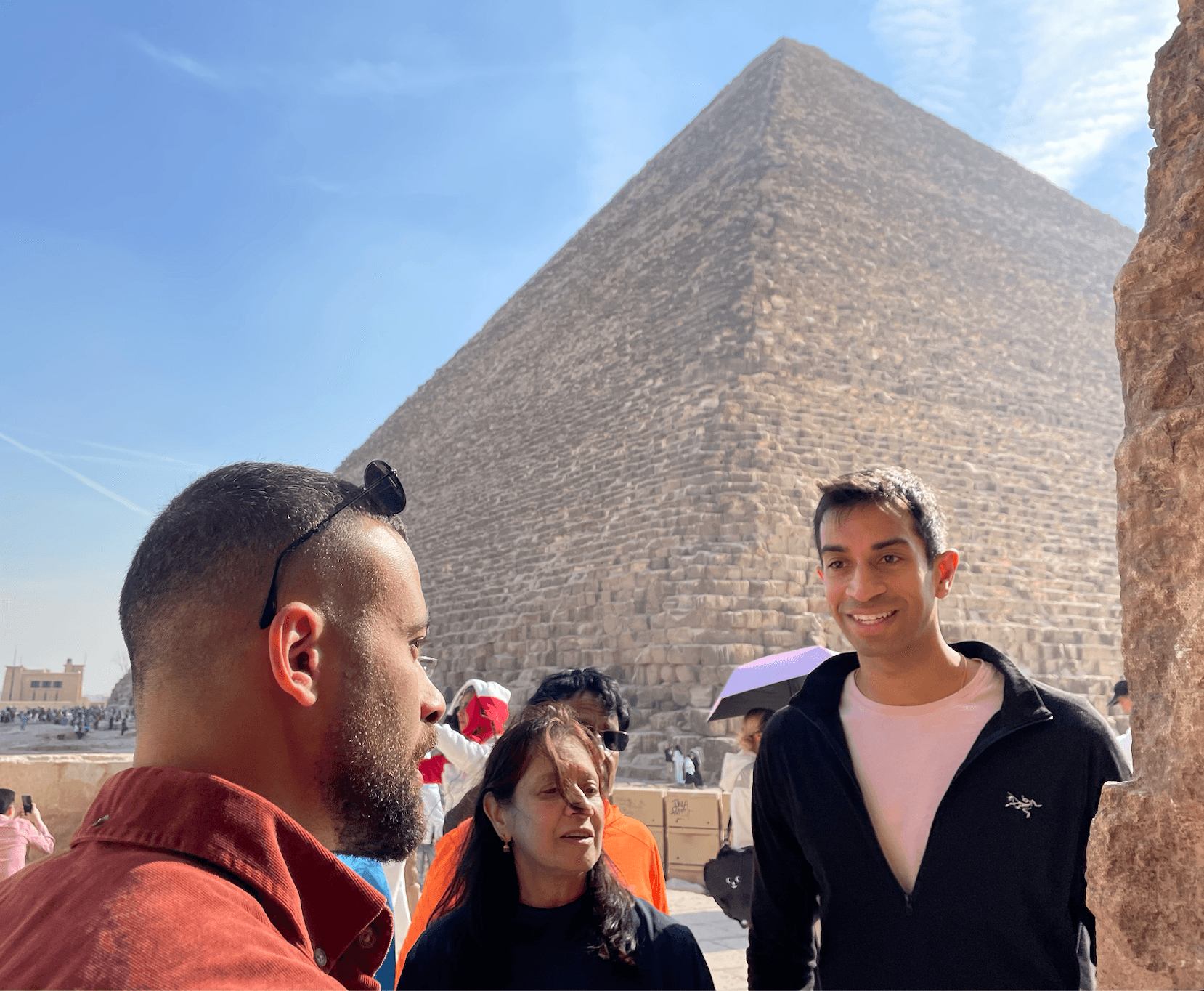
Experience Egypt's most legendary landmarks in one expertly guided day
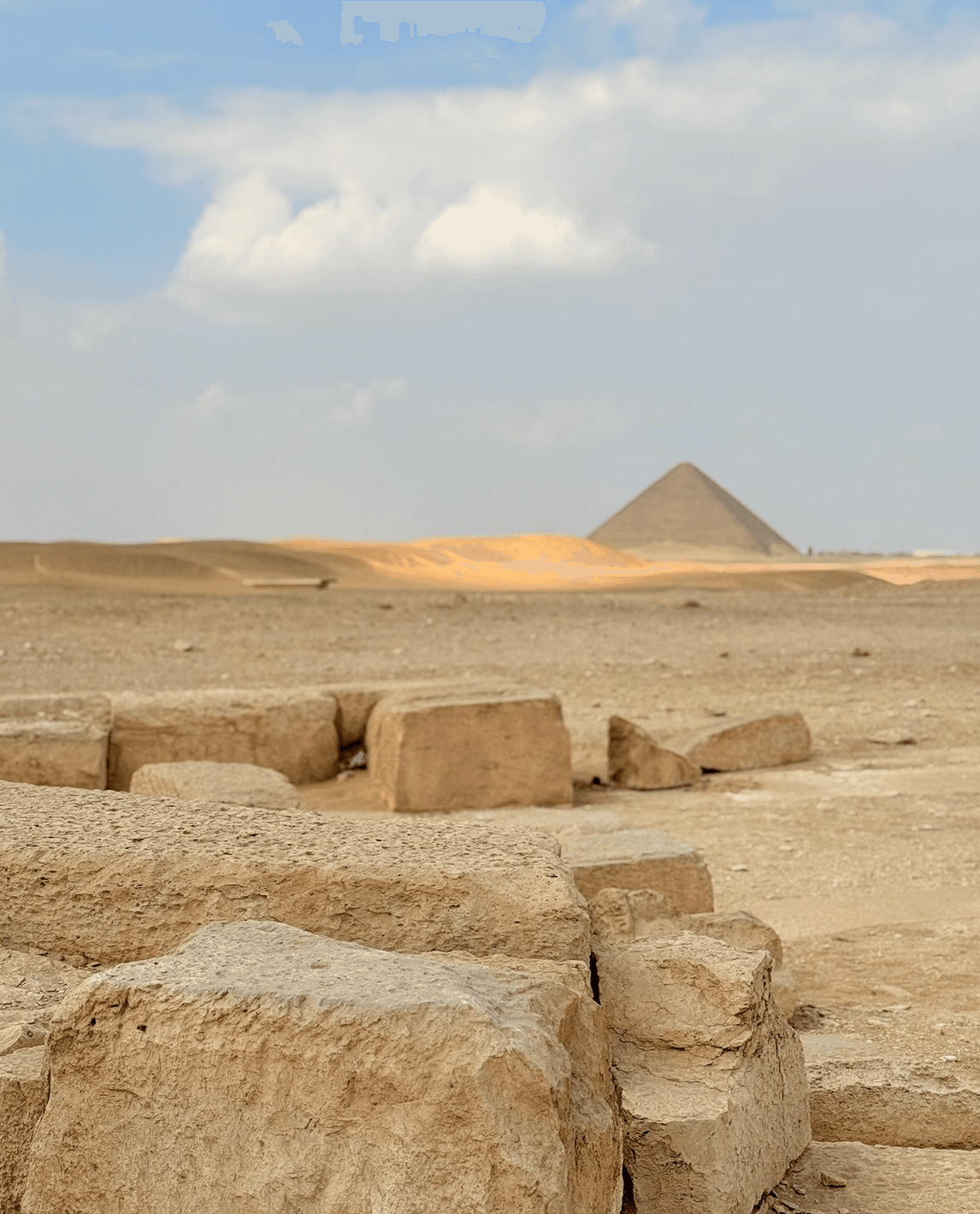
Giza Pyramids, Grand Egyptian Museum, Memphis and the Serapeum over two days
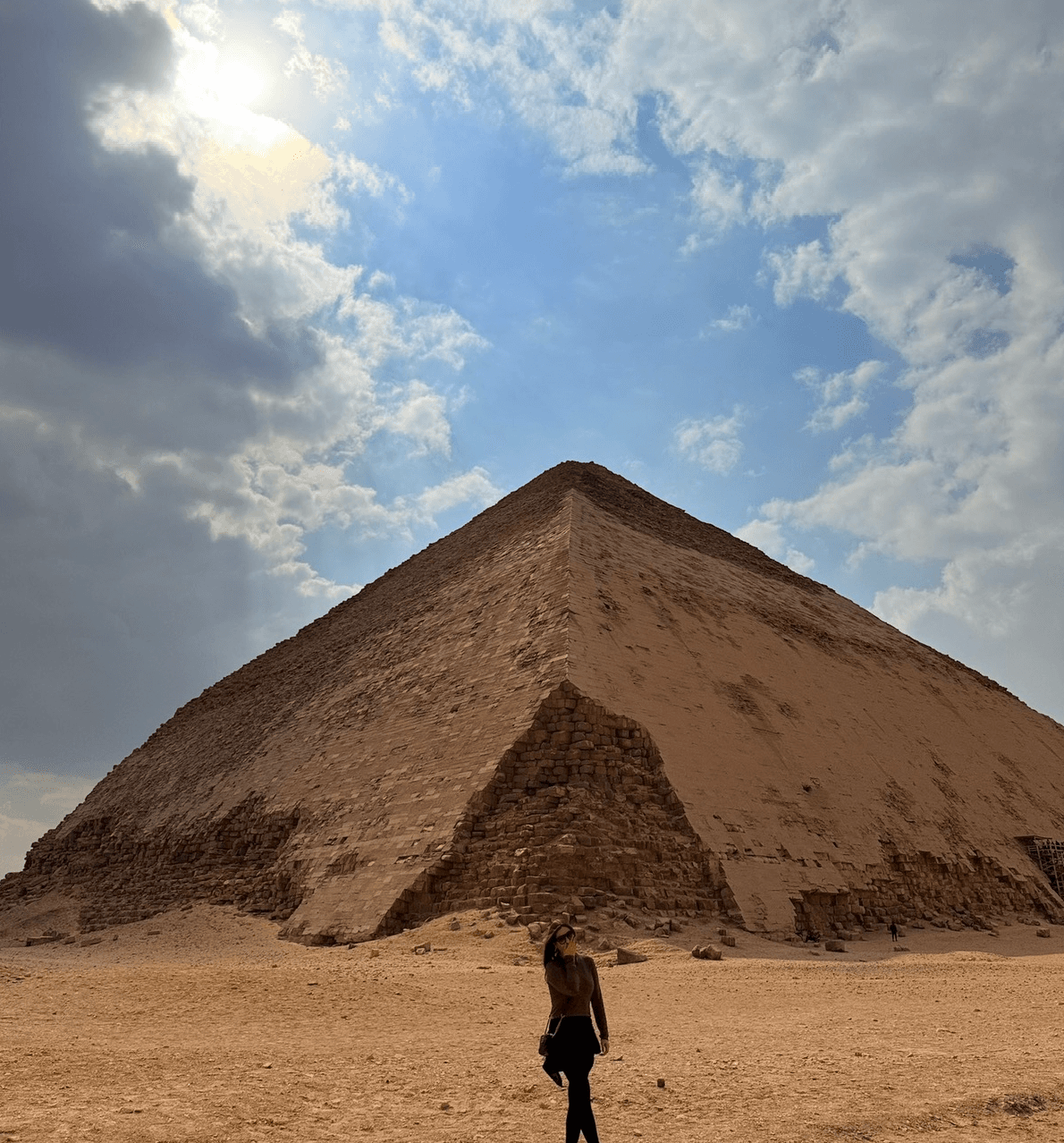
Follow the complete progression of pyramid construction across 8 pyramids with interior access to 6
For travelers with a serious interest in Egyptian history, Saqqara is arguably more rewarding than Giza. It is home to the world's oldest stone structure, the first pyramid ever built, and the oldest religious texts in human history inside the Pyramid of Unas. Unlike Giza, Saqqara is quiet, uncrowded, and spans nearly 3,500 years of Egyptian history in a single location. Travelers who have done both consistently say Saqqara was the day that surprised them most.
The Pyramid of Unas dates to approximately 2375 BCE and contains the Pyramid Texts, the world's oldest religious writings. Carved in vivid turquoise hieroglyphs across the burial chamber walls, these texts are ancient Egypt's earliest known attempt to describe the soul's journey into the afterlife. The exterior is an unremarkable mound of rubble. The interior is one of the most extraordinary spaces in Egypt.
The Tomb of Mehu was discovered in 1940 and remained closed to the public for nearly 80 years, only opening in 2018. It belongs to Mehu, Chief Justice and Vizier to Pharaoh Teti during the 6th Dynasty, and is exceptional for the quality and color preservation of its wall reliefs. Scenes of daily life, harvesting, fishing, metalworking, musicians, and dancers cover every wall in colors that have survived more than 4,000 years. Most visitors to Saqqara never know it exists.
Yes. Both the Red Pyramid and the Bent Pyramid at Dahshur are open for interior access. The Red Pyramid requires descending a long angled corridor into a magnificent corbelled burial chamber with a ceiling rising over 12 meters. The Bent Pyramid is more physically demanding, with a steep narrow shaft requiring you to crouch through tight passages. Both are entirely optional and your guide will give you an honest assessment before you decide. Neither is suitable for guests with mobility concerns or claustrophobia.
The Serapeum is an underground network of tunnels carved into the Saqqara bedrock, lined with 24 black granite sarcophagi each weighing up to 80 tons, built to house the mummified sacred Apis bulls. The space is cool, dimly lit, and unlike anything else in Egypt.
Technically yes, but practically it creates significant challenges. Saqqara covers a large area divided into multiple zones that require a vehicle to navigate between them. There is little to no cell service on site, no ride share or taxi pickup once you are there, and minimal signage. Sites like the Tomb of Mehu require specific knowledge to access. A licensed Egyptologist guide makes the site fully accessible in a way independent travel cannot.
This is a full day tour with pickup at 8:00 AM and return to your Cairo hotel approximately 5:30 to 6:00 PM. Dahshur and Saqqara together require a full day to experience properly. Tours that try to cover both sites in a half day are rushed and miss the depth that makes these sites extraordinary.
This is an active day with significant walking on sandy and uneven terrain. Entry into the Bent Pyramid at Dahshur is particularly strenuous, involving a steep narrow descent that requires crouching. The Red Pyramid is more manageable but still requires navigating a long angled corridor. Both pyramid entries are completely optional. Your guide will give you an honest read before you decide. Comfortable walking shoes and sun protection are essential.