
On August 2, 2027, the moon's shadow will sweep across the ancient city of Luxor, Egypt, creating one of the most spectacular astronomical events of the century. For 6 minutes and 23 seconds, the sun will be completely obscured by the moon—the longest total solar eclipse on land until the year 2114. This isn't just any eclipse. And Luxor isn't just any location. This convergence of celestial mechanics and ancient Egyptian solar worship creates something truly extraordinary.
⚡ Eclipse Quick Facts
- Date: August 2, 2027
- Location: Luxor, Egypt
- Totality Duration: 6 minutes 23 seconds
- Longest total eclipse on land until: 2114
- First Contact: 11:25 AM (local time)
- Totality Begins: 12:35 PM
- Clear Sky Probability: ~80%
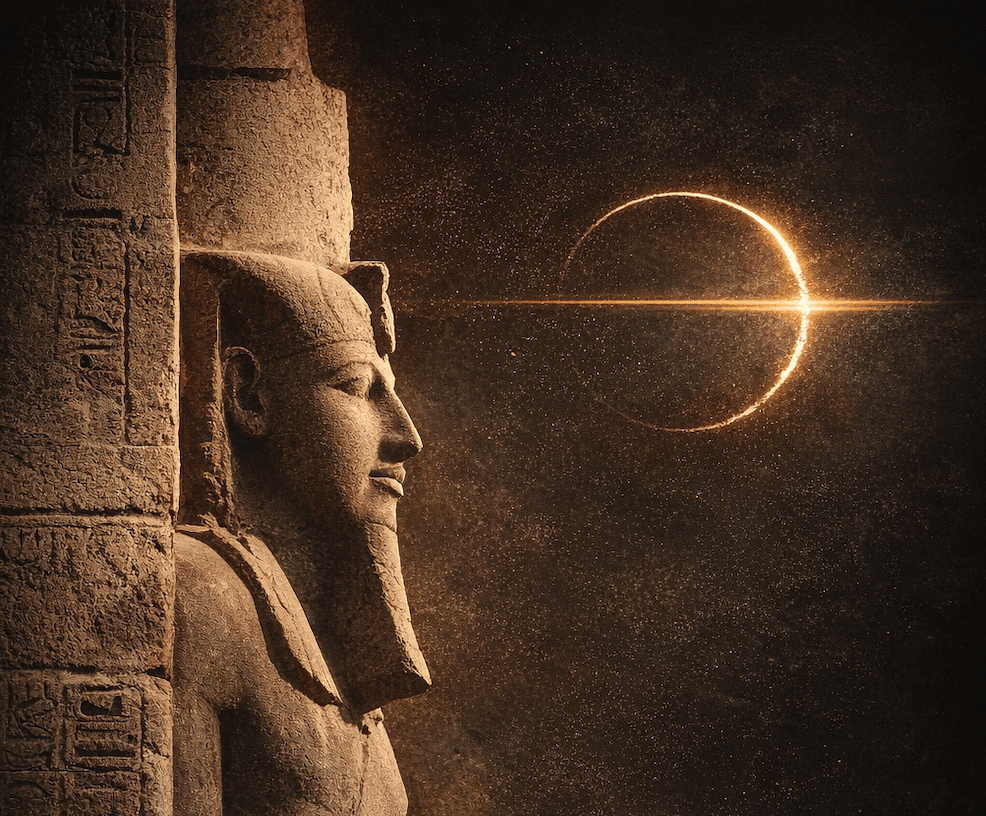
What Makes the 2027 Solar Eclipse Special
Let me start with the numbers that make this eclipse remarkable. The August 2, 2027 total solar eclipse will pass directly over Luxor, Egypt, offering 6 minutes and 23 seconds of totality. To put that in perspective, most total eclipses last 2-3 minutes. Some last just seconds. This will be the longest total solar eclipse visible from land until 2114—87 years from now. If you miss this one, you won't see another eclipse this long in your lifetime. The eclipse path cuts across North Africa and the Middle East, but Luxor sits in an optimal position: directly in the center of the path of totality, with excellent infrastructure for travelers, and surrounded by some of the world's most significant solar temples.
The 2027 eclipse offers 6 minutes 23 seconds of totality over Luxor—the longest total solar eclipse on land until 2114. This is a once-in-a-lifetime astronomical event.
Why Luxor is the Best Location to View the 2027 Eclipse
Several cities fall within the path of totality for the 2027 eclipse, but Luxor stands out for multiple reasons: Longest totality duration: At 6 minutes 23 seconds, Luxor offers among the longest totality of any major city in the eclipse path. Weather reliability: August in Luxor has approximately 80% probability of clear skies based on historical weather data. While nothing is guaranteed, Luxor's desert climate makes it one of the most reliable eclipse viewing locations globally. Ancient solar temples: Luxor is home to Karnak Temple (aligned to the winter solstice sun), Luxor Temple (aligned to the Nile and solar worship), and nearby Dendera Temple (featuring one of the most complete astronomical ceilings in Egypt). Witnessing a solar eclipse from the land where sun worship originated adds profound meaning to the experience. Tourism infrastructure: Unlike remote desert locations, Luxor has hotels, restaurants, medical facilities, and international airport access. You can witness this rare event without sacrificing comfort or safety. Combination with tourism: Most eclipse chasers will travel internationally to see the 2027 event. Luxor allows you to combine eclipse viewing with exploration of the Pyramids of Giza, Valley of the Kings, and other world-class archaeological sites.
Luxor offers the perfect combination: longest totality (6:23), 80% clear sky probability, ancient solar temples, modern infrastructure, and world-class tourism attractions all in one location.

Ancient Egyptian Eclipse Beliefs and Solar Worship
The ancient Egyptians didn't just observe the sun. They built their entire civilization around it. Ra, the sun god, was considered the king of all gods. Every sunrise represented Ra's victory over darkness and chaos. Every sunset was his journey through the underworld, battling the serpent Apophis to ensure the sun would rise again. Solar eclipses terrified ancient civilizations worldwide because they represented the sun god's temporary defeat—the world plunged into darkness in the middle of the day. While we have limited direct records of how ancient Egyptians interpreted solar eclipses (they were considered bad omens and often went unrecorded), we know they tracked celestial movements with remarkable precision. The alignment of temples to solar events, the astronomical ceilings depicting constellations and planetary movements, the religious texts describing Ra's cosmic journey—all demonstrate sophisticated astronomical knowledge. Witnessing a total solar eclipse from Karnak or Dendera temples connects you to this 5,000-year tradition of solar worship and astronomical observation in a way that viewing from a random location simply cannot match.
Ancient Egyptians built their civilization around sun worship. Witnessing the eclipse from temples dedicated to Ra adds 5,000 years of cultural meaning to the astronomical event.

Eclipse Day Timeline: What to Expect on August 2, 2027
Here's what the eclipse will look like in Luxor, Egypt, on August 2, 2027 (all times local Egypt time): 11:25 AM - First Contact: The moon begins to pass in front of the sun. The eclipse begins, but to the naked eye, nothing looks different yet. You'll need eclipse glasses to see the moon taking its first 'bite' out of the sun. 11:25 AM - 12:35 PM - Partial Eclipse Phase: Over the next 70 minutes, the moon gradually covers more and more of the sun. The light becomes increasingly strange—dimmer but not dark, with an eerie quality that's hard to describe. Shadows become sharper. Colors look muted. The temperature drops. 12:35 PM - Totality Begins: The moment the sun is completely covered, everything changes. Day becomes night. Stars appear. The sun's corona—normally invisible—bursts into view as a spectacular halo of white light around the black disk of the moon. Venus and possibly other planets become visible. This is the only time you can safely look at the eclipse without glasses. 12:35 PM - 12:41 PM - TOTALITY: For 6 minutes and 23 seconds, you experience one of nature's most spectacular phenomena. The horizon glows orange in all directions (like a 360-degree sunset). The temperature drops noticeably. Animals and birds react to the sudden darkness. Time feels suspended. 12:41 PM - Third Contact: The sun begins to reappear. A brilliant 'diamond ring' effect marks the end of totality as the first rays of sunlight break through. You must immediately put eclipse glasses back on. 12:41 PM - 1:50 PM - Partial Eclipse Phase: The moon gradually moves away from the sun. The strange light begins to normalize. Over the next 70 minutes, the eclipse ends and normal daylight returns. 1:50 PM - Fourth Contact: The eclipse is over. The entire event lasts approximately 3.5 hours from start to finish.
The total eclipse spans 3.5 hours (11:25 AM - 1:50 PM). Totality occurs from 12:35-12:41 PM—6 minutes 23 seconds when day becomes night and you can safely view without glasses.

Planning Your 2027 Egypt Eclipse Trip
If you're serious about witnessing the 2027 eclipse from Luxor, here's what you need to know about planning:
Book NOW—Luxor hotels are selling out over a year in advance. Expect August temperatures of 95-108°F, but 80% clear sky probability. Tours range from $3,000-8,000+ depending on accommodation level.
Book Immediately
This cannot be overstated: Luxor will be completely overwhelmed for the 2027 eclipse. Hotels are already selling out. Major international tour operators have already blocked large numbers of rooms. Many Luxor properties are fully booked for eclipse week more than a year in advance. If you're reading this and thinking 'I'll wait and see,' you're likely already too late for the best accommodations. Book now.
Weather Considerations
August in Luxor is HOT. Expect daytime temperatures of 95-108°F (35-42°C). However, eclipses offer a unique silver lining to summer heat: during totality, the temperature can drop 10-15°F (6-8°C), making the midday eclipse surprisingly comfortable. More importantly, August is Luxor's dry season with minimal rainfall and approximately 80% probability of clear skies—making it one of the most reliable eclipse viewing locations globally. While weather can never be guaranteed, Luxor's desert climate offers better odds than most locations in the eclipse path.
Tour Options
You have several options for experiencing the 2027 eclipse in Egypt: Independent Travel: Book your own flights and hotels, view the eclipse from a public location. This is the most budget-friendly option but requires significant planning and offers no expert guidance during the eclipse or temple visits. Group Eclipse Tours: Many astronomy tour operators offer group eclipse tours to Luxor. These typically include transportation, accommodations, eclipse viewing location, and some sightseeing. Expect to pay $3,000-8,000+ per person depending on accommodation level and trip duration. Private Eclipse Tours: Boutique tour operators (like PyraVista) offer private eclipse tours combining optimal eclipse viewing with expert Egyptologist guides, ancient solar temples, and customized itineraries. These offer the most intimate and educational experience but come at a premium price point. Nile Cruise Eclipse Viewing: Some Nile cruise operators are planning special eclipse cruises, allowing you to view totality from the river. This combines the eclipse with luxury Nile cruising but may have less flexibility in exact viewing location.
Eclipse Safety
Never look directly at the sun during partial eclipse phases without proper eclipse glasses (ISO 12312-2 certified). During the brief totality phase (those 6 minutes 23 seconds when the sun is completely covered), you can safely view the eclipse with the naked eye. But the moment totality ends, you must immediately put eclipse glasses back on. Do not use regular sunglasses, camera viewfinders, or improvised filters. Only use proper eclipse glasses or solar filters designed specifically for eclipse viewing.
Combining the Eclipse with Egypt's Ancient Solar Temples
The real magic of experiencing the 2027 eclipse in Egypt isn't just the celestial event itself. It's the opportunity to combine that event with visits to temples specifically built for solar worship. Here are the must-visit solar temples that make an Egypt eclipse tour so meaningful:
Must-visit solar temples: Karnak (winter solstice alignment), Luxor Temple (sun god worship), Dendera (astronomical ceiling masterpiece), and Abu Simbel (solar penetration twice yearly).
Karnak Temple - The Greatest Solar Temple
Karnak Temple in Luxor is one of the largest religious complexes ever built, dedicated primarily to Amun-Ra (a fusion of the creator god Amun and the sun god Ra). The main axis of Karnak is aligned to the winter solstice sunrise. On the shortest day of the year, the sun rises directly down the temple's central corridor, illuminating the sanctuary. Visiting Karnak before or after witnessing the eclipse adds profound context to solar worship in ancient Egypt. Walk through the Great Hypostyle Hall with its 134 massive columns, stand before the obelisks that once gleamed in the sunlight, and imagine what ancient Egyptians thought when the sun god's light was temporarily extinguished.
Luxor Temple - Solar Alignment and Ancient Festivals
Luxor Temple, located right in the city of Luxor, was dedicated to the rejuvenation of kingship and closely connected to solar worship. The temple is aligned to the Nile River and features multiple obelisks (one was gifted to France and now stands in Paris). These obelisks were symbols of the sun god, their pyramid-shaped tops representing the rays of the sun. Luxor Temple is also famous for the Opet Festival, an annual celebration where statues of the gods were paraded from Karnak to Luxor Temple to celebrate the flooding of the Nile and the sun's life-giving power.
Dendera Temple - Egypt's Astronomical Masterpiece
While slightly farther from Luxor (about 60 miles north), Dendera Temple absolutely deserves a visit on any Egypt eclipse tour. Dendera features the most complete and best-preserved astronomical ceiling in Egypt, depicting the zodiac, constellations, and celestial movements as understood by ancient Egyptians. The temple was dedicated to Hathor, but solar worship plays a central role. The temple's roof offers stunning views, and the astronomical ceiling provides context for ancient Egyptian understanding of celestial events—including possibly eclipses. A full-day visit to Dendera is essential for anyone interested in ancient Egyptian astronomy. The temple is less crowded than Luxor's main sites and offers an incredibly well-preserved experience.
Abu Simbel - Ramesses II's Solar Spectacle
Though farther south near Aswan, Abu Simbel demonstrates ancient Egyptian mastery of solar alignment. Twice per year (February 22 and October 22), the sun penetrates deep into Abu Simbel's Great Temple, illuminating the statues of Ramesses II and the gods in the inner sanctuary—all except the statue of Ptah, the god of darkness. This solar alignment, built over 3,200 years ago, demonstrates the astronomical precision that made ancient Egyptian temples architectural marvels. While Abu Simbel is too far south for optimal eclipse viewing (it falls outside the path of totality), many eclipse tours include it as an extension for those wanting the complete Egyptian solar worship experience.